Professional services website design / Sydney
Professional services websites. Expertise made clear.
High-trust websites that turn specialist expertise into a clear proposition, credible evidence and a useful consultation path.
The direct answer
What does a professional services website need to establish?
It must show who the firm helps, which problems it solves, why its expertise is relevant and what a prospective client should do next. Service, sector, people and insight content should reinforce one another.
Credible evidence
Technical and search depth
Qualified enquiries
Built around sector decisions
Make expertise easier to choose.
Professional services buyers compare reputation, relevance, approach and risk. The website should help them self-qualify without reducing complex expertise to generic promises.
Positioning
Clarify audience, value and meaningful differentiation.
Service architecture
Give priority capabilities distinct, decision-ready pages.
Sector pathways
Show how expertise applies across relevant client markets.
People and expertise
Connect specialists to services, insights and approved credentials.
Case evidence
Present challenge, approach and delivered work without invented outcomes.
Consultation UX
Create direct contact pathways with appropriate qualification.

Evidence before assertion
Make specialist capability easier to evaluate.
Strong industry pages connect technical or professional depth to buyer tasks, proof and a useful next step. They avoid generic claims and explain what the business can substantiate.
Inspect selected workClarify
Complex capability becomes easier to understand.
Prove
Claims connect to projects, people and credentials.
Qualify
Enquiries carry more useful commercial context.
Sydney sector requirements
Design for informed, risk-aware buyers.
Professional services buyers compare reputation, relevance, approach and risk. The website should help them self-qualify without reducing complex expertise to generic promises.
Authority without fog
Use specific language, evidence and useful detail.
Connected expertise
Link people, services, sectors, work and insights contextually.
High-consideration conversion
Answer doubt before asking for a meeting.
Search and authority
Build a sector knowledge system—not a keyword landing page.
Service, application, project, resource and question content should reinforce one another. This helps customers evaluate fit while giving search and AI systems clearer evidence of relevance and expertise.
Service depth
Give priority capabilities a distinct, useful destination.
Application context
Explain how capability changes across sectors or use cases.
Proof graph
Connect every major claim to relevant work, credentials or approved evidence.
Commercial measurement
Track qualified enquiries, downloads and high-value engagement.
Explore the portfolio
See the work behind the approach.
Selected examples from Simpli’s portfolio. Each project explains its scope, design approach and visual direction.
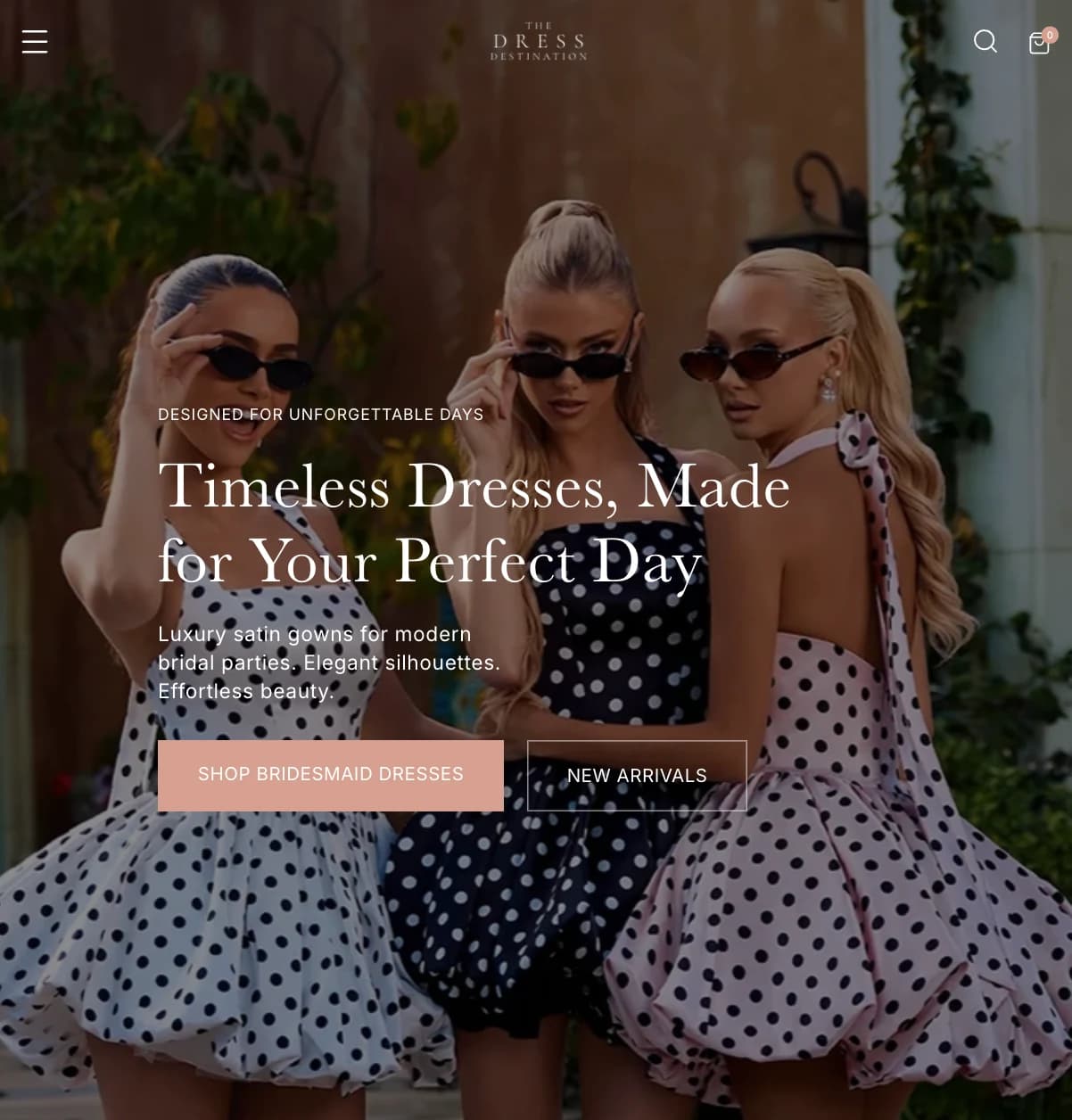
The Dress Destination
Campaign-led ecommerce connecting visual identity, mobile discovery and purchase.
The Part Store
A complex marketplace and catalogue structured around buyer tasks.
Padaley Lodge
A brand and hospitality experience balancing atmosphere with practical decisions.
Google-reviewed
Proof lives outside the pitch.
Independent Google reviews help prospective clients assess the experience behind the work—communication, delivery and the quality of the finished result.
5.0 ★★★★★ on Google
Five published Google reviews support the client experience. Rating and count verified September 2026; check Google for the current total.
Real project evidence
Pair the reviews with case studies showing the brief, approach and delivered work.
No invented proof
Only published client feedback and demonstrable project outcomes are used.
Why the answer is credible
Evidence before assertion.
120+ websites
Experience across service, ecommerce, marketplace and information-rich digital experiences.
Established 2013
Long-term website, search and commercial experience applied to each decision.
5.0 Google rating
Five published Google reviews support the client experience; no invented ratings or review volume.
Evidence-led
Published work and transparent scope support claims; rankings and outcomes are never guaranteed.
Straight answers
Straight answers before you commit.
Useful questions answered without the agency fog.
01Can you design for several practice areas?
Yes. Information architecture can connect shared expertise while keeping each priority service distinct.
02Should every team member have a profile?
Only when it helps customers evaluate expertise or supports the content strategy. Profiles should have a clear purpose.
03Can the website support thought leadership?
Yes. Insights can connect to relevant experts, services and sectors rather than sitting in an isolated blog.
Build a stronger digital position in Sydney.
Startthe brief